Property as Your Child's Education Fund in JB
Published on July 29, 2026·7 min read
University fees keep climbing. See how a freehold, RTS-adjacent JB condo can grow a 15-year education fund — honest maths, and a tax-clean exit for citizens.

University fees keep climbing. See how a freehold, RTS-adjacent JB condo can grow a 15-year education fund — honest maths, and a tax-clean exit for citizens.
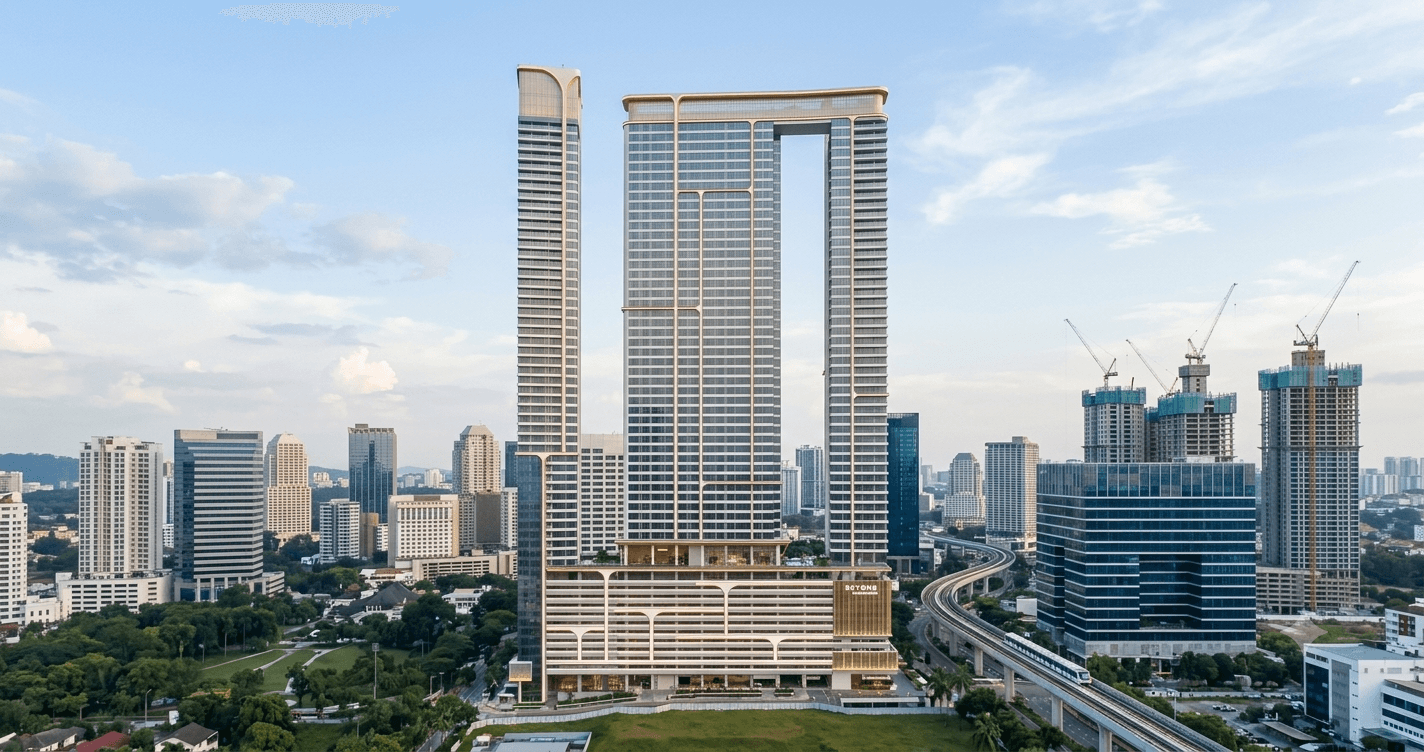
Your child is three today. The first university invoice lands around 2041. The number on it will be larger than today's, and the date will not shift to suit your savings. That is the real problem an education fund solves: not just growing money, but growing enough of it by a date you don't control.
Malaysian tuition is not cheap once you leave the public system. A degree at a local public university costs roughly RM8,000–12,000 a year in tuition; a local private university charges around RM25,000–60,000 a year, so a full degree there lands well into six figures; and sending a child abroad for even the final year of a twinning programme can add RM100,000 or more to the total (We Love Supermom, cost of education in Malaysia 2026, accessed July 2026). Those numbers rise with each year you wait to start.
Most parents build the fund in a fixed-income vehicle — SSPN, ASB, or a unit trust. Those are liquid, low-risk, and easy to top up, and for many families they are the right base. What they don't do is give you leverage on a large, appreciating asset or a monthly rental income while you wait.
Property does both, and asks for the opposite trade. It is illiquid — you can't withdraw RM20,000 for a laptop and a deposit — and its value can fall as well as rise. So the honest framing is a split: keep the near-term, must-have money in a liquid plan, and use property for the long-horizon growth portion you won't need to touch for a decade or more. One is the deposit; the other is the engine.
The reason this works better in central JB than in most of Malaysia is the RTS Link. A new transit node tends to lift the land around it, and the market has already started to price it in. Property agencies tracking the corridor through 2025–2026 estimate that homes within roughly 5 km of a future RTS station appreciated by up to about 20%, with condos within walking distance of Bukit Chagar up an estimated 8–12% since 2024, and leading neighbourhoods projected to grow 7–10% in 2026 (iQI Global, Johor real estate outlook 2025–2026, accessed July 2026).
Treat those as analyst estimates, not a forecast you can bank on — past movement doesn't lock in future gains, and a long hold will pass through soft years as well as strong ones. What the RTS gives an education-fund buyer is a genuine, dated demand driver on a 15-year horizon: the line opens early 2027, and the Johor–Singapore corridor keeps drawing jobs and tenants over exactly the window your child is growing up. The capital appreciation outlook and the Bukit Chagar price data go through the evidence and the risks in full.
Two features earn their keep across a decade-plus:
Take the entry Type A dual-key at SkyOne, filed from around RM628,000. No one can promise a rate of return, so use a deliberately conservative, illustrative 4% a year — not a forecast, just a round number to show the mechanism:
Change the growth rate and the picture changes with it — at 2% the gain is smaller, and a bad market could erase it for a stretch. That is the trade for the upside. Run the entry price through the calculator to see the financing side in your own numbers.
The tax rules reward the patience an education fund already needs. Real Property Gains Tax (RPGT) for a Malaysian citizen falls with each year you hold, and reaches 0% from the sixth year onward — so a fund set up while your child is young clears the five-year mark long before the fees are due. Sell any time from year six and the gain is yours, tax-free. See the official schedule from the Inland Revenue Board (LHDN). Every citizen also gets a once-in-a-lifetime exemption on the disposal of a private residence, worth keeping in reserve.
SkyOne's dual- and triple-key layouts suit this goal better than a single-key unit. Each lockable half rents on its own, so you can let both while the fund grows and feed the rent back in. Later, if the plan changes, you can house the student in one half and rent the other, or move a grandparent in. The dual-key breakdown works through the rent-both-halves maths.
This is a growth asset against a fixed deadline, so name the risks plainly:
Start early and this becomes a long, patient hold with a clear exit. Late and rushed, it becomes a bet. Run your entry number on the installment calculator, then message us for an appreciation-and-rent projection matched to your child's timeline.
Discover more insights and updates about our premium development

Is Johor Bahru really cheaper than Singapore? A 2026 side-by-side on rent, food, healthcare and transport for anyone earning in SGD and living in JB.
Published on September 30, 2026 · 5 min read

How much can you borrow for a Johor Bahru home, and can EPF fund the deposit? A Malaysian's 2026 financing playbook — LTV tiers, KWSP withdrawal and DSR.
Published on September 28, 2026 · 8 min read

What happens to property near the RTS when Bukit Chagar opens in 2027? An evidence-led look at the proximity premium and which freehold units gain most.
Published on September 25, 2026 · 6 min read