Summary
- Same rules, different upside. As a Malaysian you buy on identical terms in both cities — graduated 1–4% stamp duty, up to 90% financing, 0% RPGT from the 6th year — so the decision comes down to price, yield and growth, not tax.
- JB city centre is far cheaper per square foot. Median transacted prices sit around RM340–360 psf in Johor Bahru versus roughly RM1,000–1,250 psf in central Kuala Lumpur — KL is about three to four times more expensive per square foot.
- JB yields are higher on average. Gross condominium yields run about 5.5–6.5% in Johor (and 6–8% for prime RTS-adjacent stock) against a KL city average near 4.9%.
- Different growth stories. JB rides the RTS Link (opening early 2027) and the Johor–Singapore Special Economic Zone; KL leans on depth, maturity and the future MRT3 Circle Line (operational around 2032).
- Both carry oversupply risk — location and genuine proximity to transit matter more than the city label.
- Estimate your monthly repayment →
Figures reflect market data accessed June 2026 and vary widely by project and location. Confirm current prices, yields and tax rates with the cited sources and your solicitor before committing.
The two cases in brief
For a Malaysian buyer, Johor Bahru and the Klang Valley are not really competing on the rulebook — stamp duty, financing limits and the exit tax are national. They compete on the deal: how much you pay per square foot, what it rents for, and what is likely to move the price over your hold. Johor Bahru's city centre is the corridor story — a cross-border rail link and a new economic zone arriving on a low price base. Kuala Lumpur is the maturity story — a deep, liquid market with established demand, a wide tenant pool and its own rail expansion. Here is the honest, sourced comparison.
The rules are the same for a Malaysian in both cities
Whether you buy in Bukit Chagar or Bangsar, as a Malaysian citizen you pay the same tiered Memorandum of Transfer (MOT) stamp duty: 1% on the first RM100,000, 2% up to RM500,000, 3% up to RM1 million, and 4% above — not the flat 8% a foreigner now pays. First-time buyers can claim a full stamp-duty exemption on a home priced up to RM500,000. You can borrow up to 90% on a first or second home, tap EPF/KWSP for the deposit, and — crucially — pay 0% Real Property Gains Tax (RPGT) from the 6th year onward (30% in years 1–3, 20% in year 4, 15% in year 5). The RPGT schedule is published by the Inland Revenue Board (LHDN) (accessed June 2026) and applies nationwide. Because the tax maths is identical, choosing a city is a bet on price, yield and growth — which is exactly why JB's sub-RM1M stock is a Malaysian buyer's market.
Entry price & psf: JB city centre vs KL central
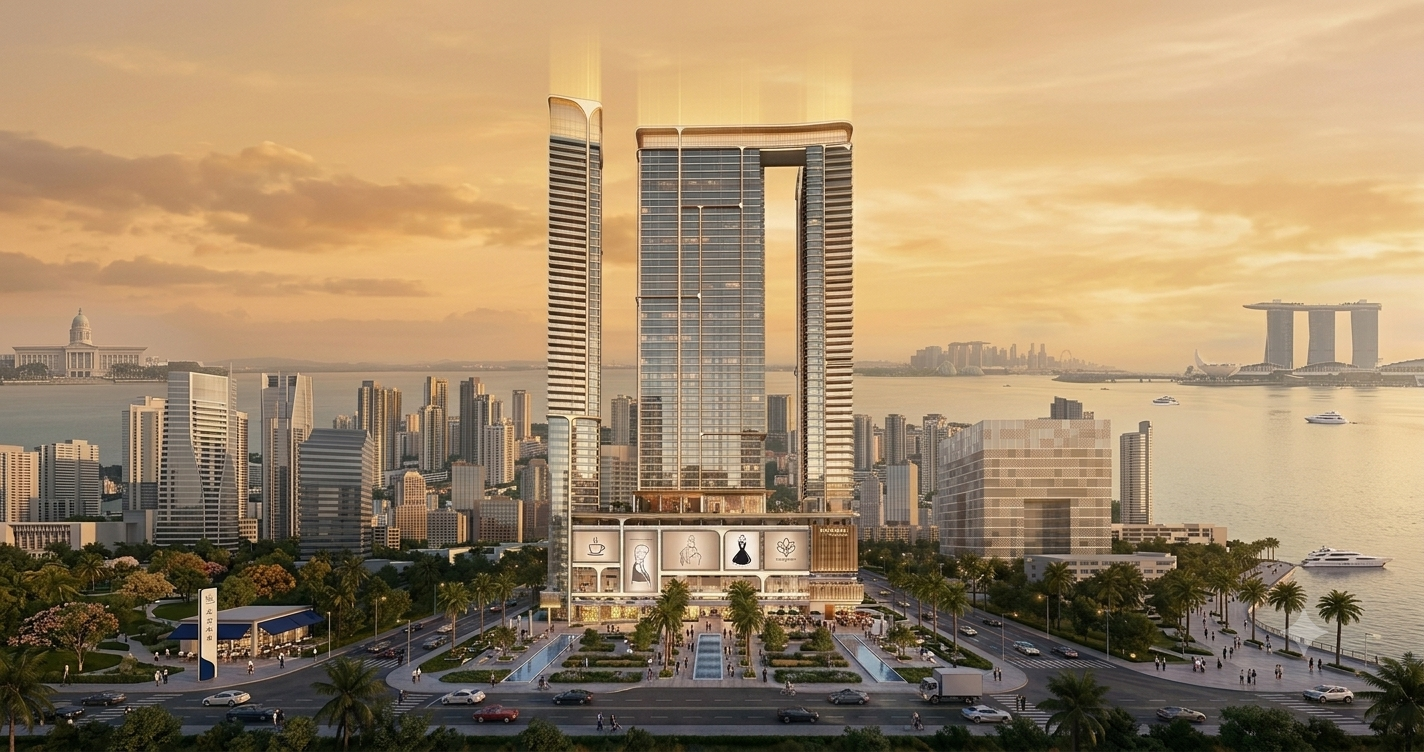
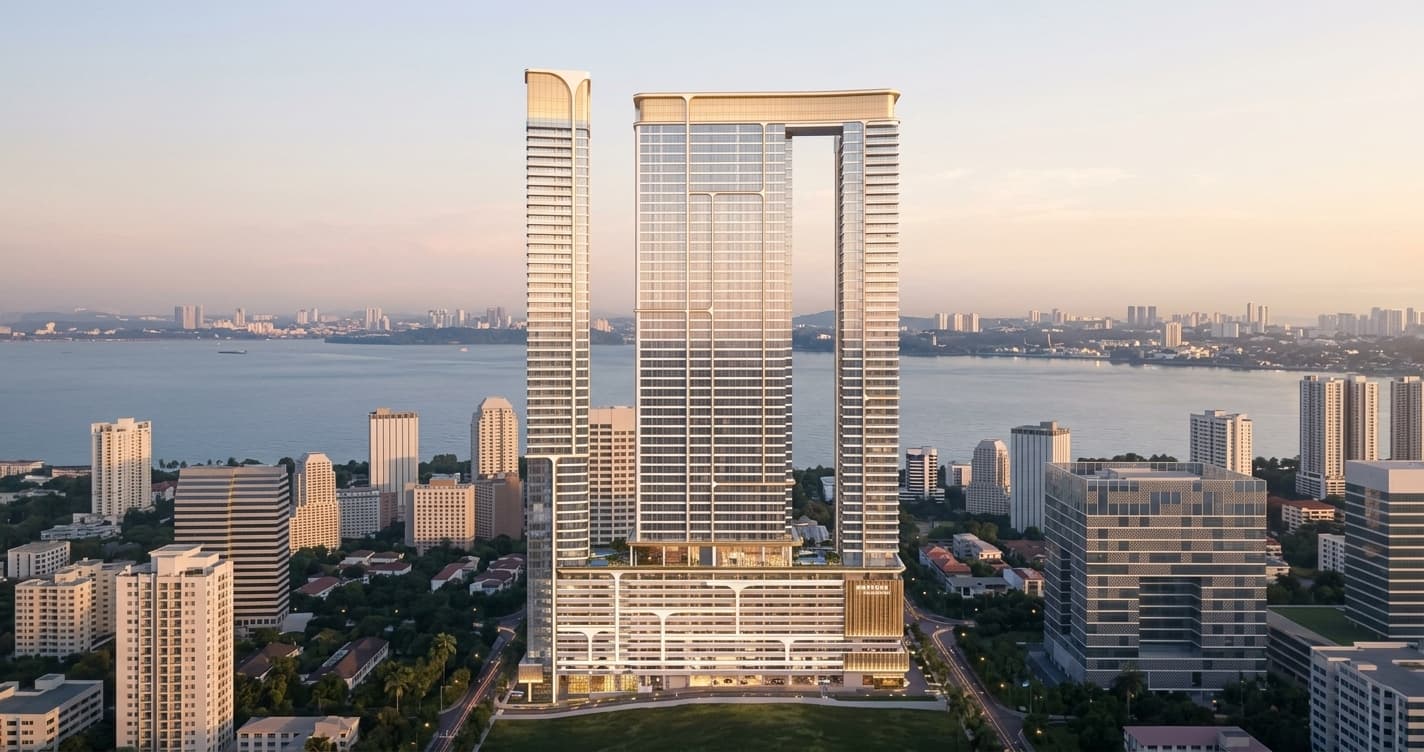
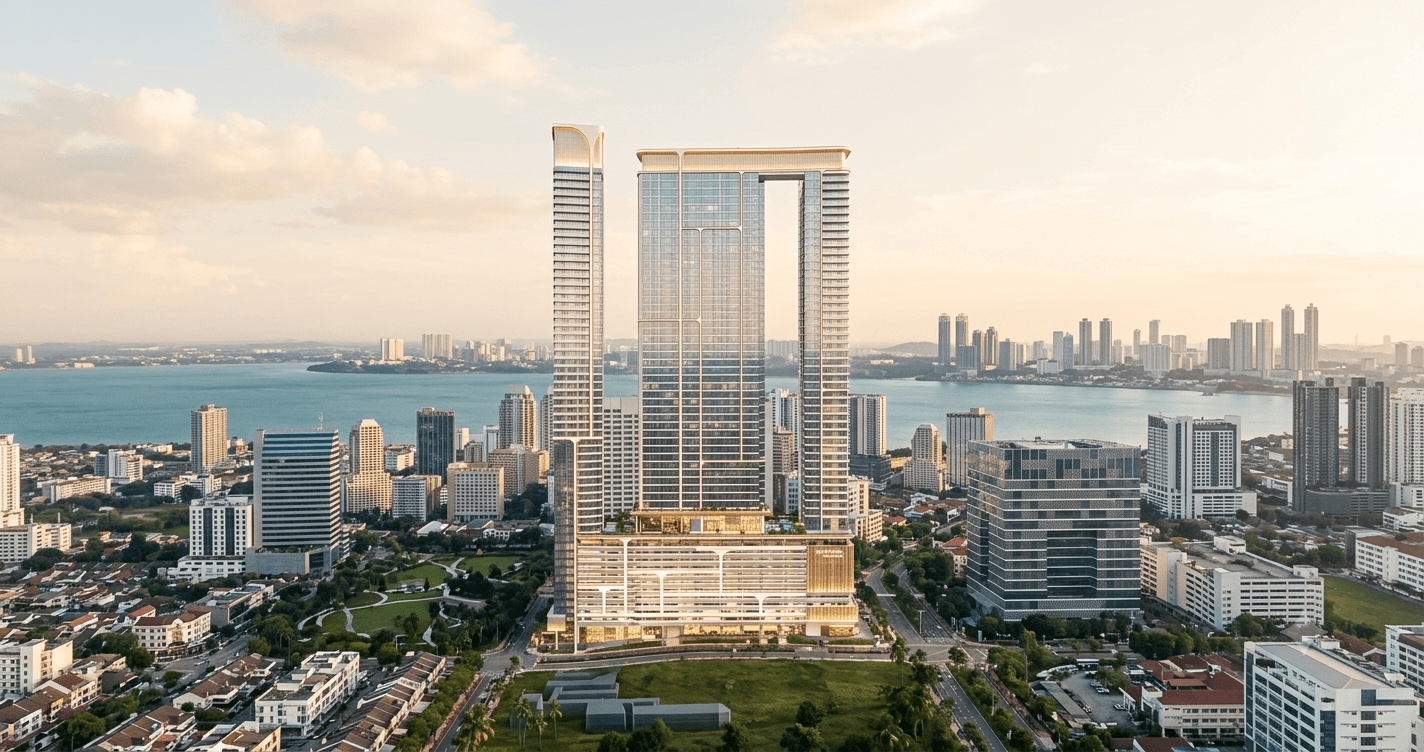
This is the starkest gap. Based on transaction data accessed in June 2026, the median price across Johor Bahru's central districts is roughly RM340–360 per square foot, with a median home near RM530,000 (brickz transacted-price data). Central Kuala Lumpur — KLCC and the prime fringe — sits closer to RM1,000–1,250 per square foot (PropertyGuru KL City Centre listings, accessed June 2026). In round terms, KL city-centre stock costs about three to four times as much per square foot as JB's. For the same ringgit, a Malaysian buyer gets materially more floor area — or a far lower entry price — in Johor Bahru. SkyOne's freehold units, for example, start from around RM628,000 in the heart of the city, about 300 m from the RTS station. Note that psf varies widely by age and address within each city; treat these as medians, not quotes.
Yield & tenant pool: who rents, and for how much
Lower entry prices and a strong tenant pool give Johor the yield edge. As of early 2026, gross condominium yields in Johor average roughly 5.5–6.5%, rising to 6–8% for well-located city-centre units near the RTS, while Kuala Lumpur apartments average about 4.9% (range ~3–6.5%), per Global Property Guide (accessed June 2026). The tenant pools differ in kind, not just size. JB's city centre draws a cross-border pool — including Malaysians who earn SGD in Singapore and rent in JB — whose ringgit budgets stretch further; that pool deepens as the RTS opens. KL's pool is broader and more corporate (local professionals, regional expatriates), which makes it steadier but rarely cheaper to enter. Remember that gross is not net: in both cities you subtract maintenance, quit rent, assessment and vacancy before the yield is real. See our realistic JB rental-yields breakdown and the dual-key "live in one, rent the other" angle, then model the repayment.
Growth drivers: the RTS and the SEZ vs KL's maturity
This is where the two cities diverge most. Johor Bahru's city centre has two near-term catalysts on a low price base:
- The RTS Link — the Bukit Chagar ↔ Woodlands North cross-border shuttle, targeted to open early 2027, turning a congested causeway crossing into a roughly five-minute ride. (See our RTS Link guide for current dates and specs.)
- The Johor–Singapore Special Economic Zone (JS-SEZ) — signed on 7 January 2025 and spanning nine flagship zones, including Johor Bahru City Centre, with an initial target of about 20,000 jobs over five years (Singapore EDB, accessed June 2026).
Kuala Lumpur's growth case is different — it rests on an already-deep, mature market rather than a single re-rating event. Its next major transit catalyst, the 51.6 km MRT3 Circle Line, received its final railway-scheme approval in July 2025 but is not expected to be fully operational until around 2032 (MRT Corp, accessed June 2026). In short: JB offers a bigger, earlier catalyst on a cheaper base; KL offers established demand with a slower-arriving upgrade. For a sober view of how transit re-rates nearby values, see our RTS capital-appreciation outlook.
Supply & oversupply risk (the honest part)
Neither city is risk-free. Johor has historically carried a meaningful residential overhang — unsold completed units — and a wave of high-rise supply is still completing around the city centre, which can cap rents and resale in the near term. Kuala Lumpur has its own well-documented glut in certain high-rise and office segments. The lesson is the same in both places: the city label does not protect you — location and genuine proximity to transit do. A walkable, freehold unit beside a station with real demand behaves very differently from an oversupplied tower a bus ride away, whichever city it is in. This is why proximity, not postcode, is the real variable.
The local-buyer maths is the same — so it comes down to upside
Step back and the tie-breaker is clear. A Malaysian pays the same stamp duty, borrows on the same LTV and exits under the same RPGT schedule in Johor Bahru as in Kuala Lumpur. With the cost side held equal, the rational decision turns on risk-adjusted upside: a lower entry price, a higher average yield, and an earlier, well-defined catalyst all currently point to the RTS-adjacent JB city centre — provided you buy genuine proximity and freehold, not hype. KL remains the safer, steadier hold for a buyer who values depth and liquidity over a corridor re-rating.
How to choose, step by step
- Define the goal first — income now, own-stay, or long-term appreciation. It changes the answer more than the city does.
- Compare net yield, not gross — subtract maintenance, quit rent, assessment and realistic vacancy in each city before you rank them.
- Weigh the catalysts against your timeline — the RTS arrives in 2027; KL's MRT3 not before about 2032.
- Check real proximity to transit — a station you can walk to, not a "near MRT" claim on a brochure.
- Stress-test supply — how much competing stock completes around your unit over your intended hold.
Verdict by goal
- For rental yield: Johor Bahru edges it, especially RTS-adjacent city-centre stock at 6–8% gross — but only after you net off costs and vacancy.
- For own-stay: it depends on where your life is. For a Malaysian who works in (or commutes to) Singapore, JB city centre wins decisively on both cost and commute; for a KL-based professional, the Klang Valley is the obvious home.
- For capital appreciation: JB carries the bigger, earlier catalyst (RTS + JS-SEZ on a low base) but is the higher-variance bet; KL is the steadier, lower-beta hold.
The local-buyer maths is the same in both cities — so let the upside decide. If your goal is yield and growth from a freehold unit a genuine 300 m from the RTS, run your monthly repayment, then talk to us for a unit-specific projection at SkyOne.