What the JB–Singapore RTS Link is, its two stations, journey time, capacity, fares and opening date — a clear, sourced reference on the Bukit Chagar–Woodlands North rail shuttle and what it means for property near the station.
Summary
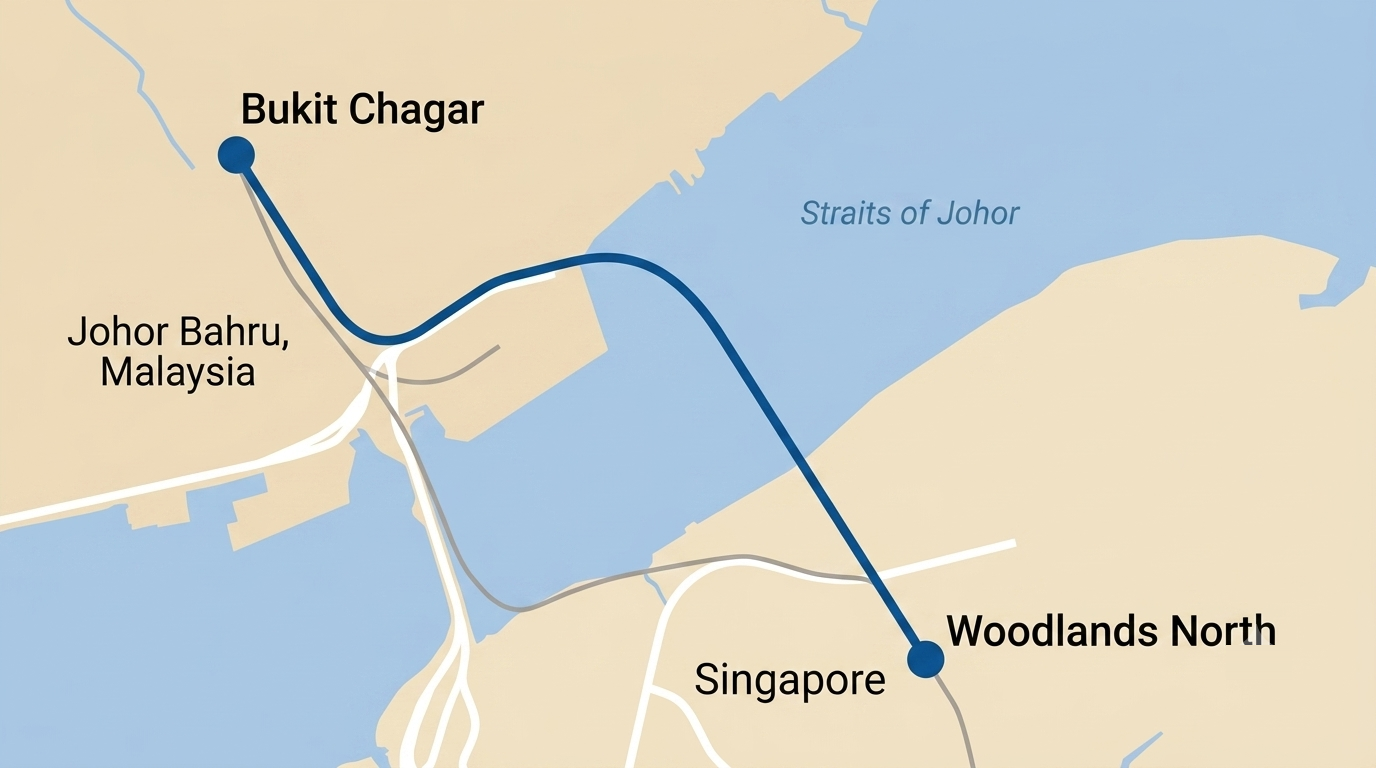
What it is: the RTS Link is a 4 km cross-border rail shuttle connecting Bukit Chagar in Johor Bahru with Woodlands North in Singapore.
When it opens: passenger service is targeted to begin in January 2027; as of April 2026 the project was reported on track. Opening dates have shifted before, so treat this as a target, not a guarantee.
Journey time: about 5 minutes station to station.
Capacity: up to 10,000 passengers per hour per direction, with roughly 40,000 riders a day expected at launch.
One immigration stop: co-located CIQ means you clear both countries' immigration at your departure station before boarding.
Fares:not yet finalised — an indicative S$5–7 per trip has been cited by Malaysia's Transport Minister, with final fares due in the second half of 2026.
Facts below were verified against the Land Transport Authority (Singapore), MRT Corp (Malaysia) and dated news reports, accessed 3 June 2026. The opening date and fares are official targets that can change — re-check the primary sources before relying on them.
What the RTS Link is
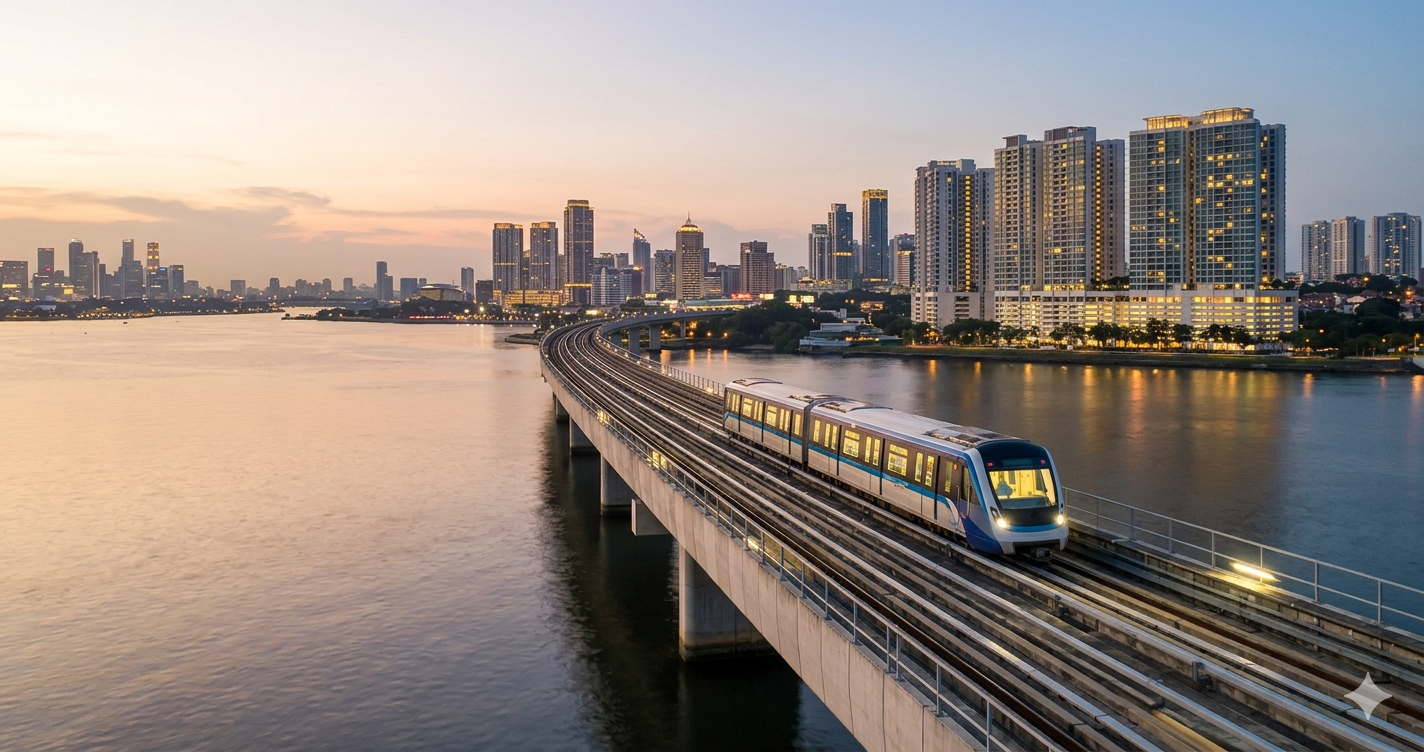
The Johor Bahru–Singapore Rapid Transit System (RTS) Link is a 4 km twin-track rail line crossing the Strait of Johor between Malaysia and Singapore. It runs from Bukit Chagar station in central Johor Bahru to Woodlands North station in Singapore, using a fleet of driverless four-car trains. It is purpose-built for one job: moving large numbers of people across the border quickly and predictably, something the Causeway cannot do at peak hours today. The project is jointly delivered by MRT Corp on the Malaysian side and the Land Transport Authority (LTA) on the Singapore side. For wider background, see the project overview.
When does it open?
Passenger service is targeted to commence in January 2027. Testing of the line was scheduled to begin at the end of 2025, with construction completion targeted for the end of 2026 and service starting at the beginning of 2027. As of April 2026, the project was reported to be on track for the January 2027 opening. A note of honesty: this timeline has moved more than once over the project's history, so treat the date as a current official target rather than a fixed certainty, and check the latest before making decisions that depend on it.
The two stations and co-located CIQ
There are just two stations, one at each end:
Bukit Chagar (Johor Bahru) — in the heart of JB city centre, beside the existing CIQ complex.
Woodlands North (Singapore) — already open as the northern terminus of the Thomson-East Coast Line.
The most important design feature is the co-located CIQ: customs, immigration and quarantine facilities for both countries are housed together at each departure station. You clear Singapore and Malaysia immigration once, before you board — there is no second checkpoint on arrival. This single-clearance model is what makes the crossing genuinely fast, removing the double-queue that defines the Causeway today.
Journey time and capacity
The train ride between Bukit Chagar and Woodlands North takes about 5 minutes. The system is designed to carry up to 10,000 passengers per hour in each direction. At launch it is expected to serve roughly 40,000 passengers a day, with long-term capacity planned for around 140,000 daily. To put that in context, the Causeway handles enormous volumes but at the mercy of road congestion; the RTS adds dedicated, weather-proof, jam-proof capacity on a fixed schedule.
Fares and operating hours
Fares are not yet confirmed. Malaysia's Transport Minister has cited an indicative range of around S$5–7 per one-way trip, and reports indicate fares will only be finalised in the second half of 2026. Detailed operating hours have likewise not been published in final form. We will update this guide once official fares and timetables are released — until then, treat any fare figure, including the one above, as a provisional estimate only.
On the Singapore side, Woodlands North is a station on the Thomson-East Coast Line (TEL), so RTS passengers step straight onto Singapore's MRT network and can ride south toward the city. On the JB side, Bukit Chagar sits within the city-centre CIQ precinct, close to buses, taxis and the wider road network. The practical upshot is a near-seamless rail-to-rail journey: walk in, clear immigration once, ride the shuttle, and continue on the MRT.
Why it changes the JB–Singapore commute
Today the Causeway is one of the world's busiest land crossings, and peak-hour trips can stretch to well over an hour of unpredictable queueing. The RTS replaces that variability with a fixed ~5-minute shuttle and a single immigration clearance. For a daily commuter, the value is not just the minutes saved but the predictability — a journey you can plan to the timetable. For a detailed look at how this compares to driving and the existing checkpoints, see our guide to the JB–Singapore CIQ crossing and the broader story of gateway connectivity living.
What it means for property near Bukit Chagar
Transit nodes reward proximity. The closer a home is to the station, the more of the convenience — and the value premium — it captures. This is the core reason the area immediately around Bukit Chagar is being watched so closely. CTC SkyOne sits about 300 m from the Bukit Chagar station — roughly a 300 m walk — which means a resident can be through immigration and on the shuttle within minutes of leaving home. Combined with its freehold tenure, that genuine walking distance is what positions SkyOne as a proximity play on the RTS rather than a project simply marketed near it.
If you are weighing an RTS-adjacent purchase, use the installment calculator to estimate your monthly repayment, then speak to us for unit-specific details on SkyOne, 300 m from Bukit Chagar station.
Explore More of SkyOne
Discover more insights and updates about our premium development