Summary
- The scenario: a Malaysian who earns in Singapore but lives in a freehold JB home a few hundred metres from Bukit Chagar station — and bought it as a local (no RM1 million floor, no state consent).
- The morning, end to end: a ~300 m walk to the station, a single immigration clearance, a ~5-minute RTS hop to Woodlands North, then the Thomson–East Coast Line into the city — a realistic door-to-Orchard estimate of roughly an hour.
- The maths that makes it work: an SGD salary on a MYR cost base, owning instead of renting a room in Singapore.
- The honest trade-offs: two-country admin, peak-hour crowds, and the fact the RTS is targeted to open in January 2027 — not running yet.
- What makes the whole thing tick is walking distance. The closer you live to the station, the more of this is real rather than aspirational.
- Estimate your monthly repayment →
The RTS Link is not yet operational — passenger service is targeted for January 2027. The timings below are built from published specifications and current rail data as of 15 June 2026, and are illustrative; confirm the live schedule once service begins.
The scenario: home in Bukit Chagar, job in Singapore
Meet a composite but entirely ordinary commuter — call her Mei. She is Malaysian, she works in Singapore's CBD, and she is paid in Singapore dollars. For years the question for people like her was binary: rent a cramped room across the Causeway to be near work, or buy at home in JB and surrender two or three hours a day to Causeway gridlock. The RTS Link rewrites that trade-off. Mei bought a freehold unit a short walk from Bukit Chagar station — and crucially, because her unit sits below the RM1 million foreigner threshold, she bought it as a Malaysian: no minimum-price rule, no State Authority consent, full local financing. Here is what her morning looks like once the line is running.
The morning, step by step
The point of living at the station is that the commute becomes a sequence of short, predictable segments rather than one long unpredictable slog:
- ~300 m — the walk. Out the door and along the covered route to the station entrance. From a residence about 300 metres away, an easy walk on foot — no car, no parking, no petrol.
- Immigration — once. Bukit Chagar has a co-located Immigration, Customs and Quarantine (ICQ) hall with e-gates, so travellers clear both countries before boarding rather than queueing twice (Singapore LTA, accessed June 2026). At off-peak this is quick; at peak, build in a buffer.
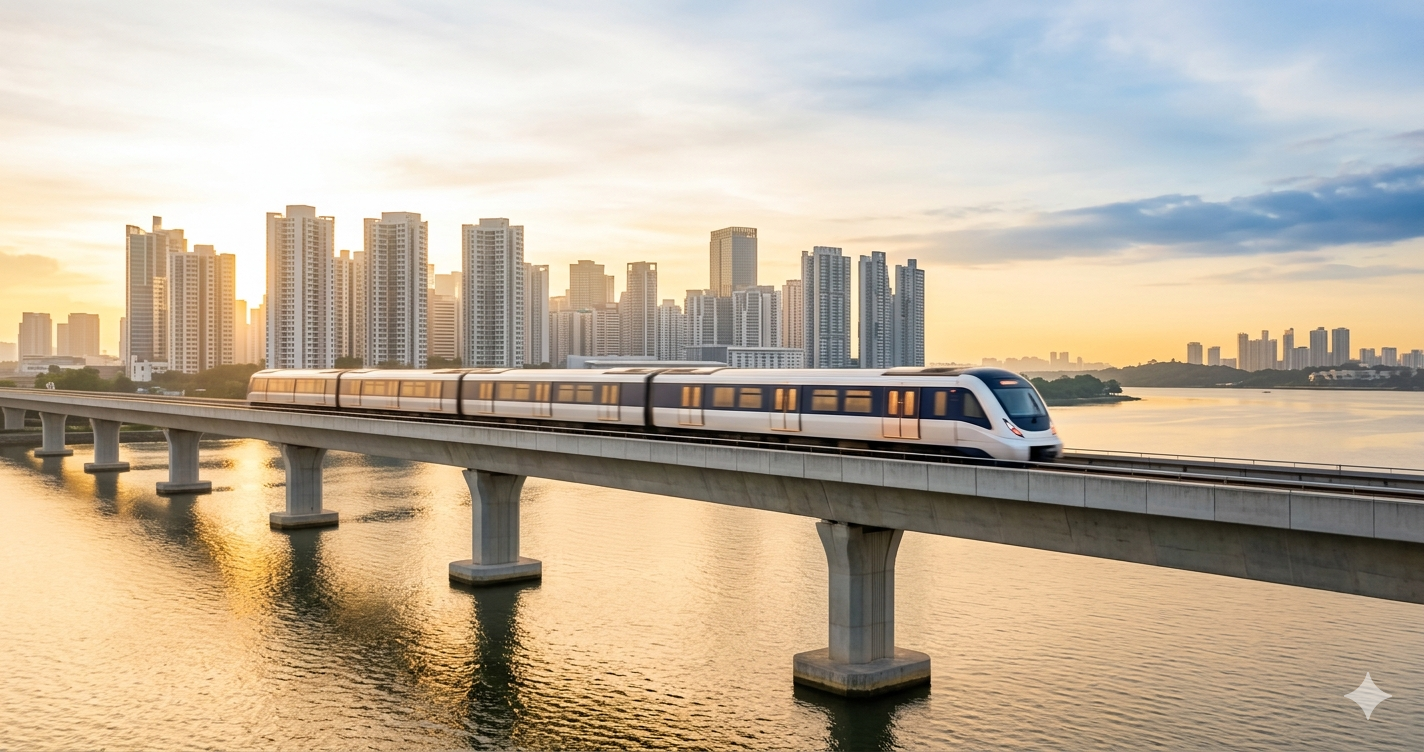
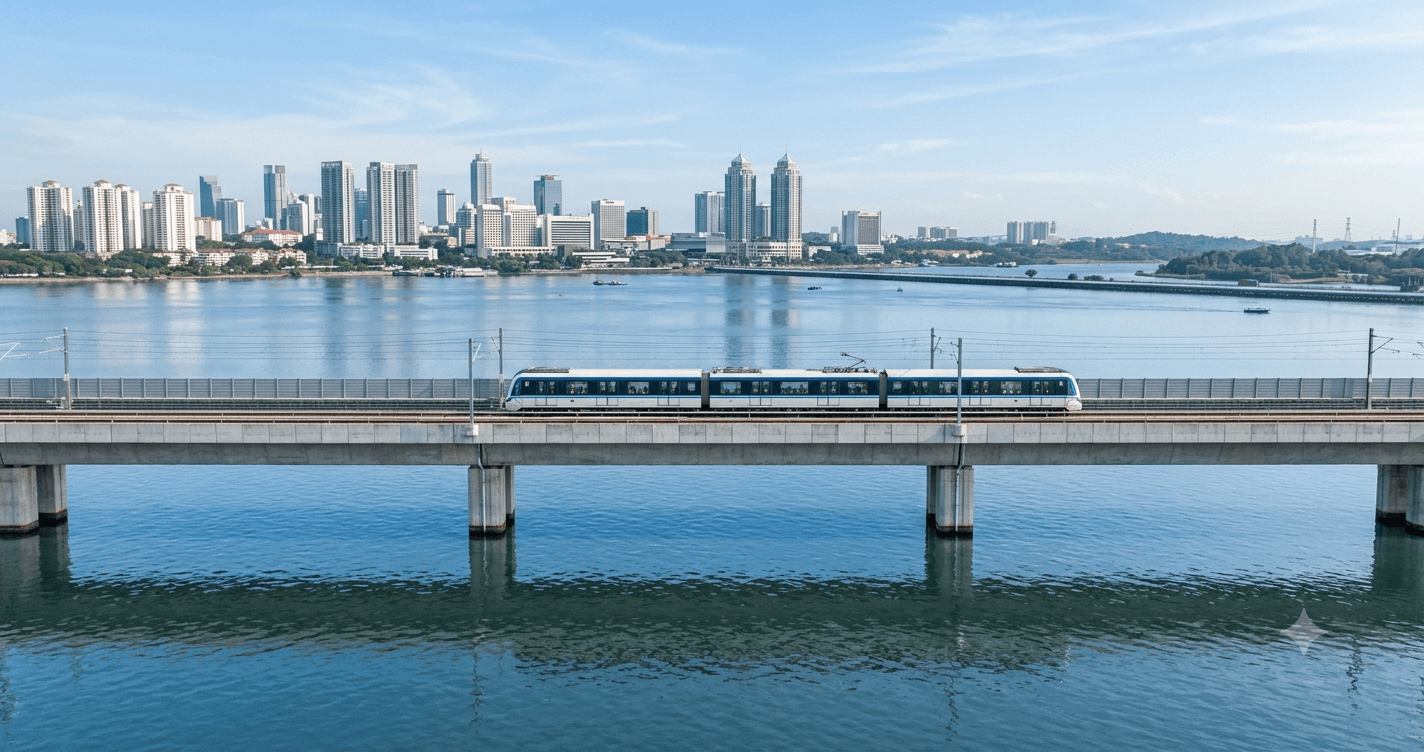
- ~5 minutes — the RTS hop. The shuttle covers the ~4 km between Bukit Chagar and Woodlands North in about five minutes, at a capacity of up to 10,000 passengers per hour per direction.
- ~40 minutes — into the city. Woodlands North is the northern terminus of Singapore's Thomson–East Coast Line (TEL), which runs directly through Orchard and the CBD to Marina Bay. Reaching Orchard is on the order of forty minutes by train.
Add the walk, the clearance and the connections, and a realistic door-to-Orchard figure is around an hour — most of it spent seated on a train you can read or work on, not idling in a queue of cars. Compare that with the Causeway commute today, where the same trip can swallow far more time with far less certainty.
The maths: an SGD salary on a MYR cost base
The commute is only half the story; the other half is what Mei does with her money. She earns in Singapore dollars and spends — mortgage, food, utilities, a car for weekends — largely in ringgit. Instead of paying rent for a room in Singapore, she is building equity in a freehold asset she owns outright. The same salary stretches dramatically further across the border; our JB vs Singapore cost-of-living comparison sets out the gap in detail. The honest caveat is currency: the SGD/MYR rate cuts both ways, and a salary earned in one currency against a loan in another carries real exchange-rate exposure. But for a daily commuter already earning in SGD, that exposure is largely natural rather than speculative.
Evenings and weekends: the lifestyle upside
A commute that ends at a station 300 metres from home gives the evening back. Bukit Chagar sits in the heart of JB, beside SKS City Mall and the Sheraton, with KSL City Mall close by — so dinner, groceries and a gym are downstairs, not a drive away. Weekends are spacious in a way a rented Singapore room rarely allows: a larger home, the option of a dual-key layout for a parent or a tenant, and the city's food and retail on the doorstep. The connectivity is the enabler; the lifestyle at the gateway is the reward.
The honest trade-offs
This piece would not be worth reading if it pretended the cross-border life is frictionless. It is not, and the realistic version includes:
- It is not running yet. The RTS is targeted to open in January 2027 (with reports flagging a possible slip to early 2027). Until then, the commute is still the Causeway.
- Two countries, two sets of admin. Tax residency, banking, car registration and insurance all involve a degree of dual-country paperwork.
- Peak crowds are real. A line this convenient will be busy at rush hour; the single-clearance design helps, but peak is peak — leave a buffer.
- Distance is everything. Every one of these timings assumes you can walk to the station. The further out you live, the more a feeder bus or a drive-and-park erodes the advantage.
Picture it from the right address
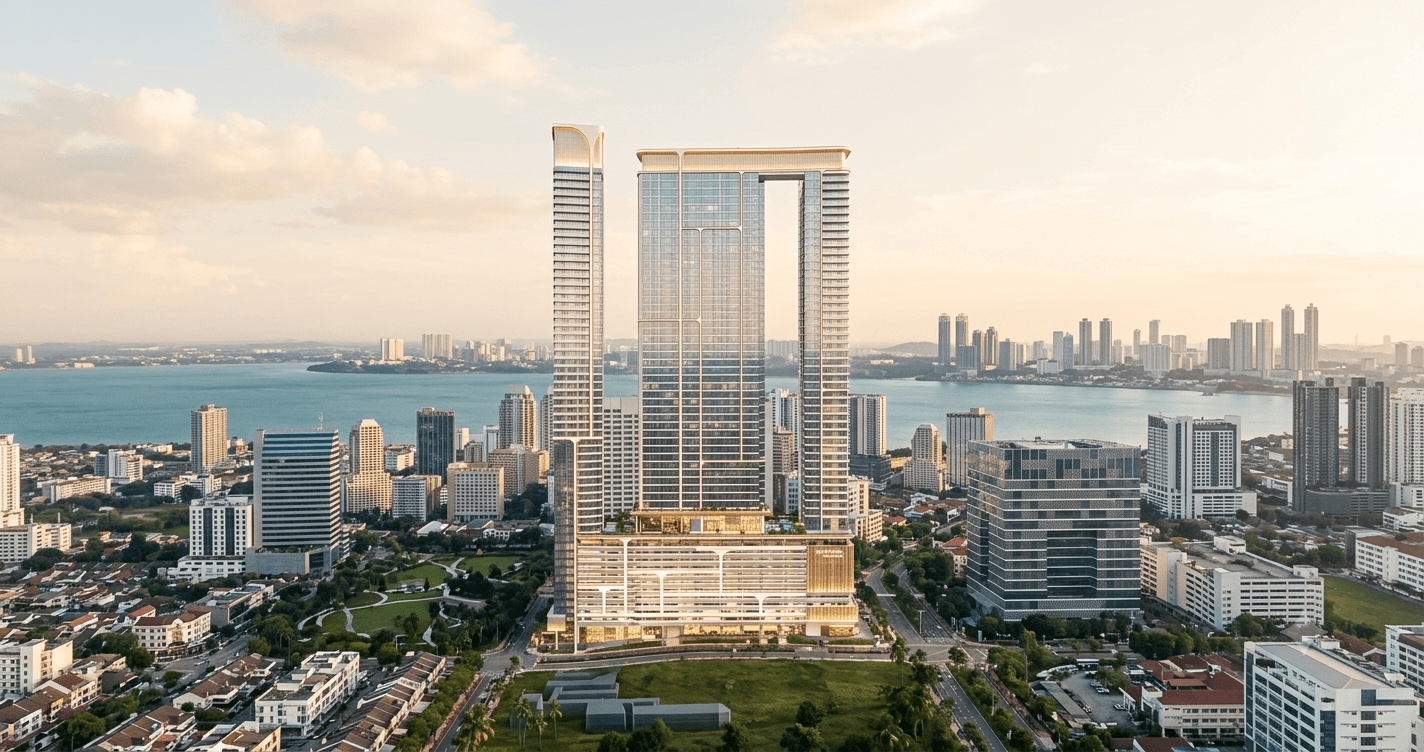
The day described above only works if the first segment — the walk — is genuinely short. That is the whole case for living at the station rather than near it. CTC SkyOne sits about 300 metres from Bukit Chagar, it is freehold, and its entry pricing keeps it a local-buyer market — the combination that turns this morning routine from a brochure promise into an ordinary Tuesday. Estimate your monthly repayment, then talk to us about the units closest to the station.