Summary
- The psf gap is large. New condominiums in prime Singapore (Core Central Region) sell upward of S$3,000 per sq ft, while city-centre Johor Bahru near the RTS trades around RM1,000–1,300 psf — roughly a 7–9x difference at mid-2026 exchange rates.
- Your Singapore budget stretches around 5–6x further. Converted at about RM3.16 to the Singapore dollar, the same outlay buys several times the floor area in JB.
- But the entry costs differ sharply. A foreigner buying in Singapore pays 60% ABSD on top of Buyer's Stamp Duty; in Johor a foreigner pays 8% stamp duty plus a 3% state consent fee — far lower, though not zero.
- Currency cuts both ways. A soft ringgit lifts a Singapore buyer's purchasing power, but adds FX risk to MYR-denominated value and rent.
- Estimate your monthly repayment →
Price-per-square-foot figures vary widely by project, age and source, and exchange rates move daily. The ranges below are indicative market data accessed in June 2026 — confirm current pricing for any specific unit before you commit.
The headline gap: price per square foot, prime SG vs JB city centre
The simplest way to see the value gap is to put the two markets side by side on a per-square-foot basis, in the same currency.
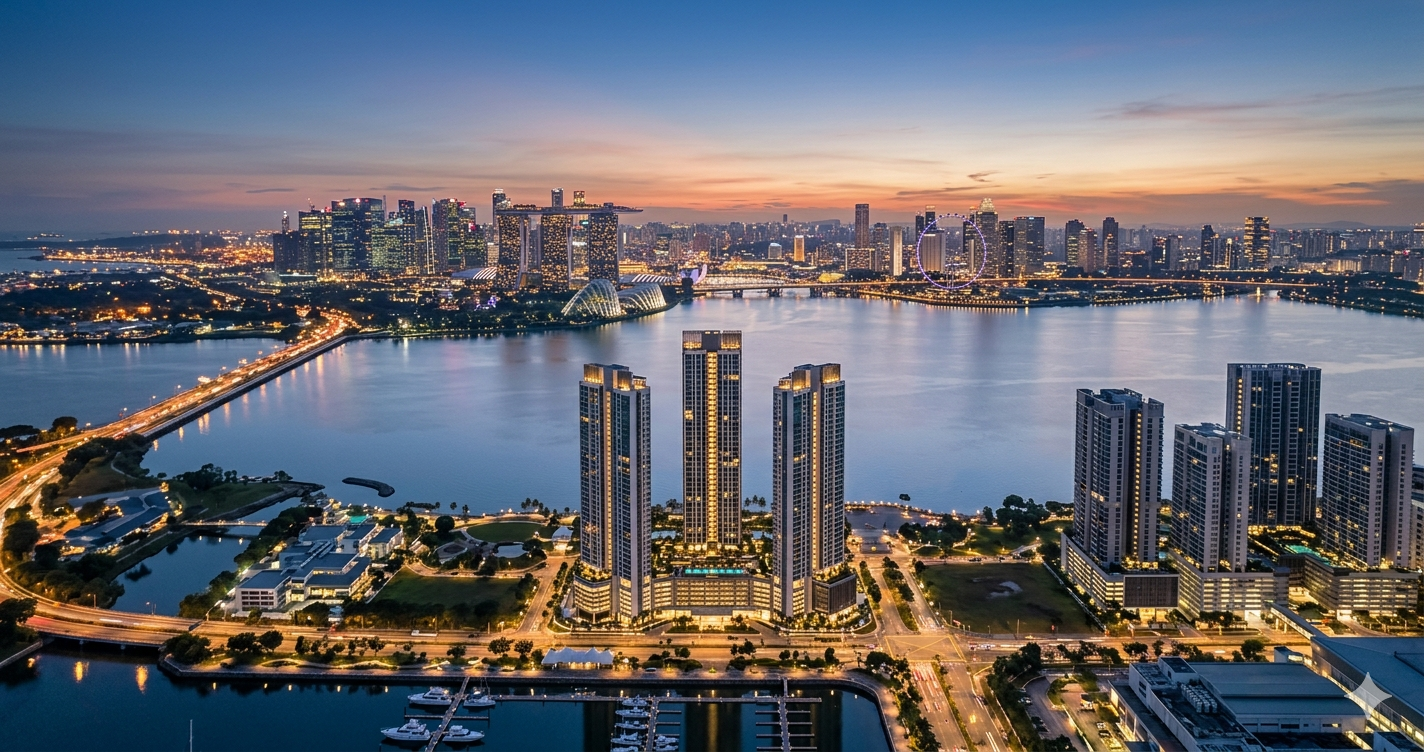
In Singapore, 2025 new-sale medians in the Core Central Region (CCR) ran above S$3,000 psf, with prime districts higher still; the city-fringe Rest of Central Region sat near S$2,400 psf and the mass-market Outside Central Region around S$2,000–2,200 psf, putting the islandwide new-launch average around S$2,200–2,400 psf (EdgeProp SG market data, accessed June 2026).
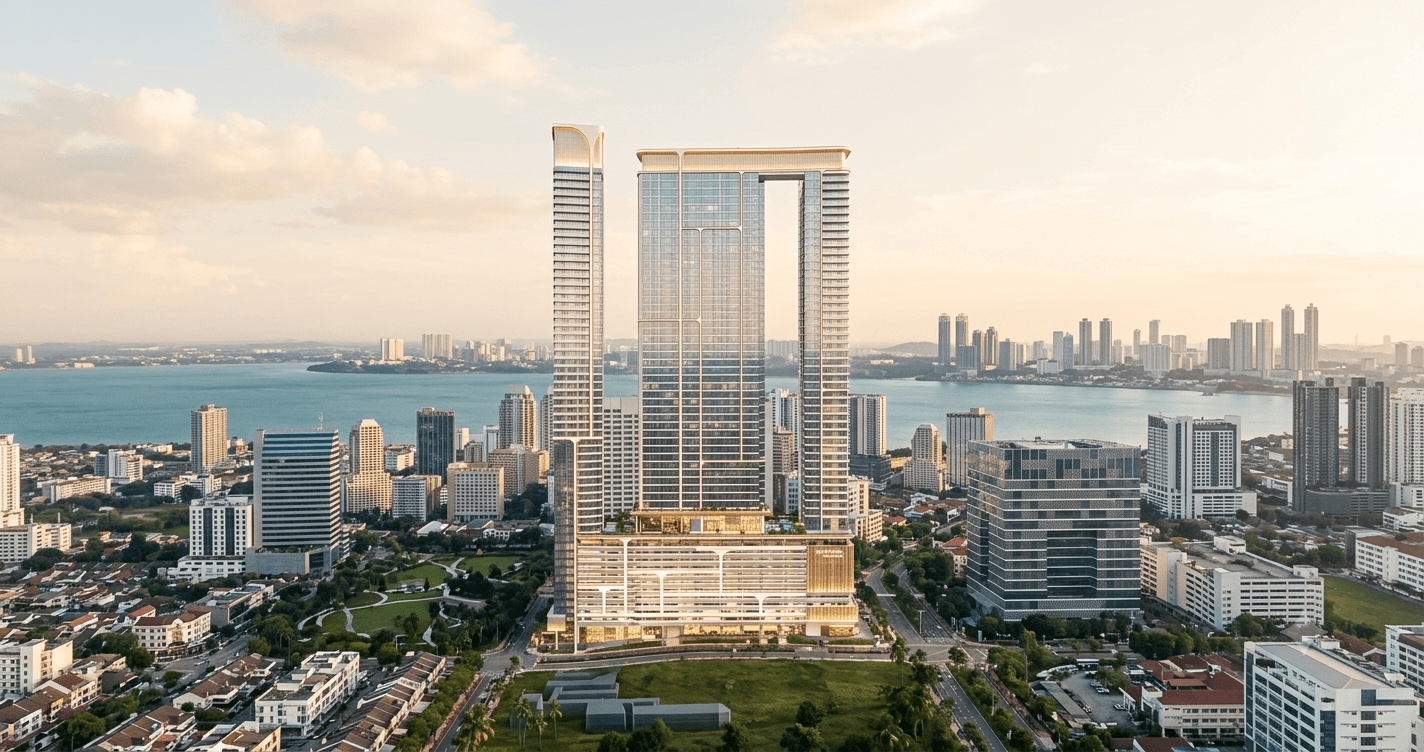
In Johor Bahru, the citywide condominium median is far lower — roughly RM350–475 psf across all ages and locations (brickz.my transaction data, accessed June 2026). But the relevant number for a cross-border buyer is the city centre next to the Bukit Chagar RTS station, where new launches sit around RM1,000–1,300 psf, with premium projects calling RM1,650–2,100 psf (Dr Wealth, accessed June 2026).
Convert at the mid-2026 rate of about RM3.16 to S$1 (x-rates, accessed June 2026) and the picture is stark: prime Singapore at S$3,000 psf is about RM9,480 psf. That makes prime SG roughly 7–9x the per-foot price of JB's RTS-adjacent city centre — and even Singapore's islandwide average works out near 5–6x JB city-centre pricing.
A like-for-like example: what your Singapore budget buys in JB
Take a S$1,000,000 budget (about RM3.16 million):
- In Singapore, at roughly S$2,200 psf for a new launch, that buys around 455 sq ft — a compact one-bedder — and that is before a foreigner adds 60% ABSD.
- In JB city centre, at about RM1,200 psf near the RTS, the same money buys around 2,600 sq ft — a large three- or four-bedroom home, or a dual-key layout you can live in and rent.
That is the heart of the arbitrage: broadly five to six times the floor space for the same outlay. For context, SkyOne sits about 300 m from Bukit Chagar station, with prices from around RM628,000 (~S$165,000) — though, as below, foreign buyers must meet Johor's minimum-price rule.
The honest caveats: it is not a clean like-for-like saving
A psf table flatters JB if you stop there. Three things close part of the gap:
- Currency. The saving is partly a strong-Singapore-dollar effect. If the ringgit strengthens, your MYR-denominated asset and rent are worth more in SGD — and if it weakens further, less. Income in SGD against a MYR loan is a real, ongoing FX exposure.
- Foreign entry costs. Johor is cheaper to enter than Singapore, but it is not free — stamp duty, the state consent fee, legal fees and (on exit) RPGT all apply. See the full breakdown in The True Cost of Buying a JB Property.
- Market segment. Compare new launch with new launch, and city centre with city centre. A cheap citywide JB median includes older, peripheral stock that is not comparable to prime Singapore.
To compare the two markets honestly, in order:
- Compare psf within the same segment (new launch vs new launch, central vs central).
- Convert at today's exchange rate, not a flattering historical one.
- Add each market's foreign entry costs (below).
- Factor your holding horizon and exit tax, since that decides whether the gap survives the round trip.
Total cost of entry compared: a foreigner in SG vs JB
This is where the gap widens again — in JB's favour. On a S$1,000,000 Singapore home, a foreign buyer pays Buyer's Stamp Duty of roughly S$24,600 plus 60% ABSD of S$600,000 — about S$625,000 in stamp duties alone (IRAS, accessed June 2026). Nationals of the US and a handful of FTA countries are treated as citizens for ABSD; most foreigners are not.
On a RM1,000,000 Johor home, a foreign buyer's headline taxes are the 8% MOT stamp duty (RM80,000) and the 3% Johor consent fee (RM30,000) — about RM110,000, with legal and loan costs taking the all-in figure to roughly 11–13% of price. The detailed maths is in our true-cost guide. Even after Johor's 2025–2026 increases, that is a fraction of Singapore's foreign-buyer load — which is much of why the JB–Singapore corridor keeps drawing cross-border buyers.
What closes part of the gap: the RTS Link
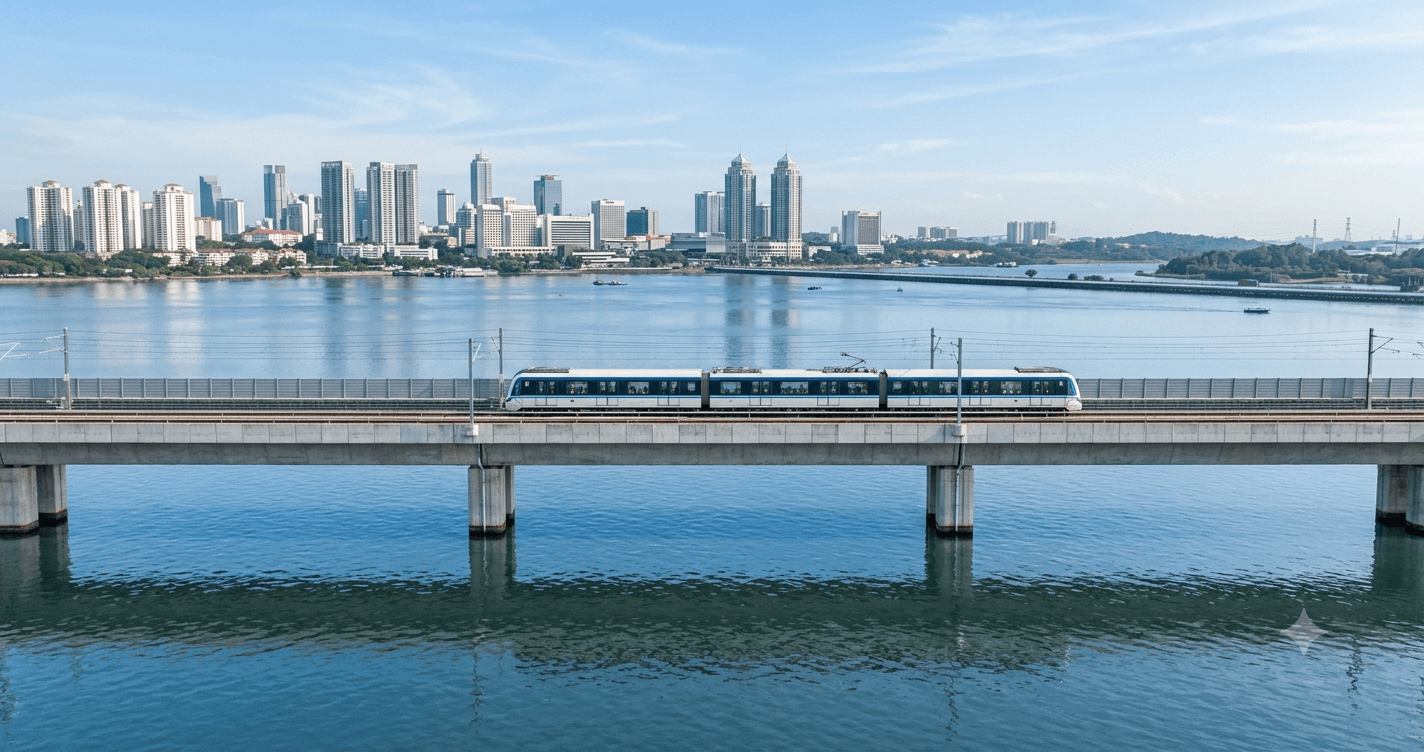
Price-per-foot in JB has historically carried a discount partly because of distance and friction at the border. The RTS Link — Bukit Chagar to Woodlands North, targeted to open early 2027 — is designed to compress that to a roughly five-minute crossing, which is precisely what re-rates land closest to the station. Market commentary points to gains of around 40–50% in the immediate Bukit Chagar catchment since 2020 (Dr Wealth, accessed June 2026); treat such figures as indicative of direction, not a guaranteed return. The investment case is that the closest, walkable units capture the most of any future premium — see condos near the RTS.
Who the value actually suits
The psf gap is not equally useful to everyone:
- Singapore-based investors priced out of SG entry costs, seeking yield and corridor appreciation rather than a like-for-like SG substitute.
- Cross-border own-stay buyers who will use the RTS and want far more space than a comparable SG budget allows.
- Dual-income, two-country households using a dual- or triple-key layout to live in one portion and rent the other.
It suits less well anyone who needs to sell inside five years (RPGT bites), or who cannot tolerate ringgit exposure on income earned in SGD.
The bottom line
On price per square foot, Johor Bahru's RTS-adjacent city centre is roughly five to nine times cheaper than prime Singapore, and the foreign-entry-cost gap widens that further. The honest catch is currency and the costs of buying and exiting — real, but modest beside the headline saving. Work out what your budget buys, estimate the monthly repayment, and talk to us for a unit-specific comparison at SkyOne, 300 m from the RTS.