RTS Link Progress 2026: Is It On Track for 2027?
Published on July 8, 2026·5 min read
Is the RTS Link on track for 2027? A dated tracker: construction is past 90%, trains are running trial laps, passenger service targets January 2027.

Is the RTS Link on track for 2027? A dated tracker: construction is past 90%, trains are running trial laps, passenger service targets January 2027.
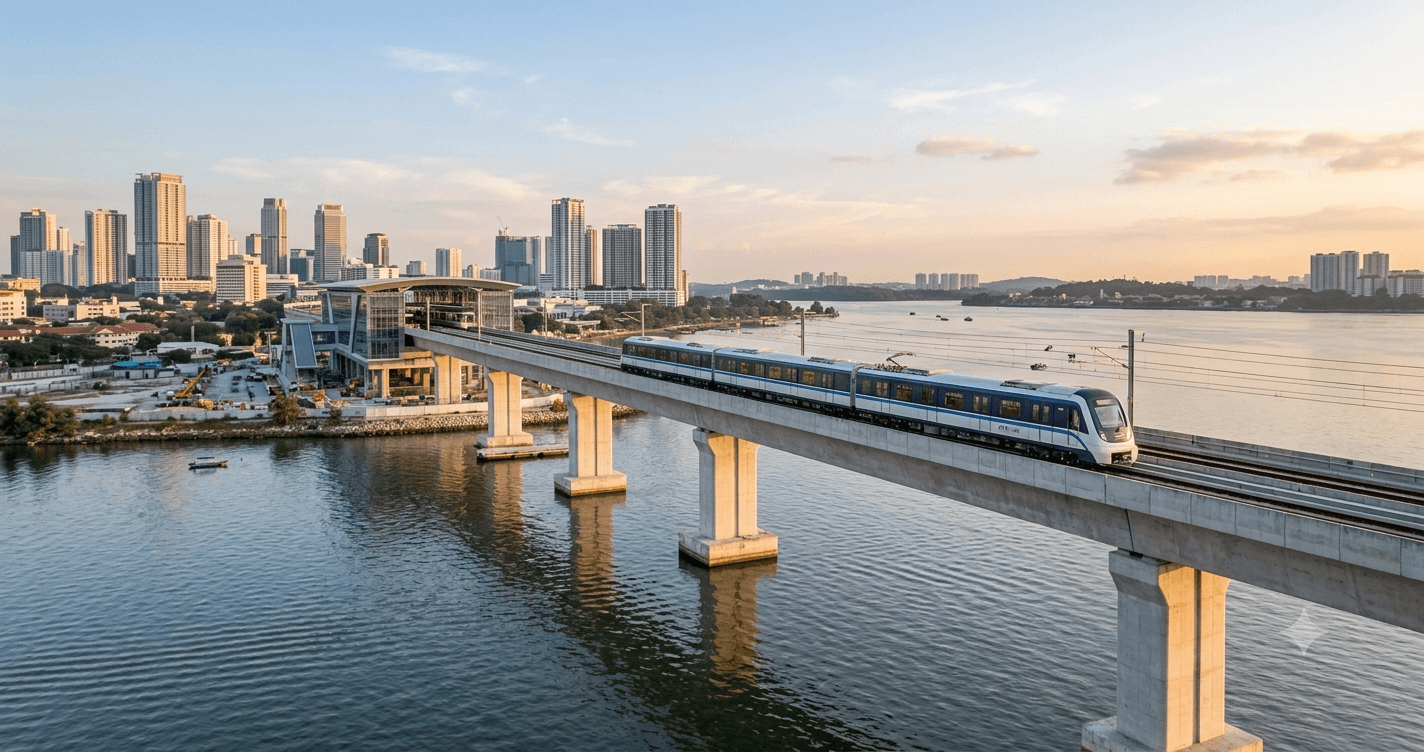
Last updated 8 July 2026. This tracker is refreshed as new milestones land.
Every few months the RTS Link timeline gets questioned again, and for good reason — the project was suspended twice before serious construction began. So here is the honest position as of mid-2026: the build is more than 90% done, trains are running trial laps across the strait, and the government's stated target is unchanged — passenger service from January 2027. Transport minister Anthony Loke reaffirmed the 2027 opening after the April 2026 trials and said Malaysia owes Singapore zero compensation, a sign the project is running to plan rather than slipping (The Edge Malaysia, April 2026).
You will see both years quoted, and both are right — they mark different finish lines. End of 2026 is when construction and system installation are due to be complete. January 2027 is when the line opens to fare-paying passengers, after the trains have logged enough fault-free test days to be certified safe. The gap between the two is the testing period, not a delay.
The RTS has a stop-start history, which is exactly why the current progress carries weight. Here is how it got here:
The recent progress has been on the systems side — the trains, power and signalling that turn a finished structure into a working railway:
The heavy civil work is behind the project. What remains is the sequence that certifies the line safe to carry passengers:
The closer the opening gets, the less speculative the value of living beside the station becomes. From SkyOne, a freehold development 300 m from Bukit Chagar station, the RTS stops being a construction headline and becomes your morning: walk to the platform, cross to Woodlands North in about five minutes, clear immigration once. Buying while the line is still in testing, rather than open, is how you get in ahead of the price the address commands once trains are carrying passengers. And because SkyOne's units start from around RM628,000 — below the RM1 million foreign-buyer floor — Malaysians buy here as locals, with no state consent and no foreign stamp-duty surcharge. Weigh the crossing options in our RTS vs Causeway commute breakdown, and check the measured distance in the 300 m walk-to-RTS guide.
The RTS is on its final approach to a January 2027 opening, and the units closest to the platform are being bought now, not after the ribbon is cut. Read the full corridor reference in our RTS Link complete guide, then run a SkyOne unit through the installment calculator to see the monthly repayment on a home 300 m from Bukit Chagar station.
Discover more insights and updates about our premium development

Is Johor Bahru really cheaper than Singapore? A 2026 side-by-side on rent, food, healthcare and transport for anyone earning in SGD and living in JB.
Published on September 30, 2026 · 5 min read

How much can you borrow for a Johor Bahru home, and can EPF fund the deposit? A Malaysian's 2026 financing playbook — LTV tiers, KWSP withdrawal and DSR.
Published on September 28, 2026 · 8 min read
What happens to property near the RTS when Bukit Chagar opens in 2027? An evidence-led look at the proximity premium and which freehold units gain most.
Published on September 25, 2026 · 6 min read