Summary
- A single person lives comfortably on about RM3,500–5,000 a month, a family of four on roughly RM8,000–12,000 — rent included. Numbeo puts everyday spending (before rent) at about RM2,172 for one person and RM7,915 for a family of four (Numbeo, accessed 17 August 2026).
- Housing is the biggest line and the biggest saving. A whole one-bedroom near the centre runs about RM1,500–2,500 a month; three-bedroom family units sit around RM1,500–2,500 further out.
- Food is genuinely cheap. A hawker plate is RM4–8, a kopitiam breakfast RM5–12, a plate of chicken rice or laksa about RM15.
- Malaysians pay a subsidised petrol price — RON95 at RM1.99 a litre under BUDI95 in August 2026 — and from early 2027 the RTS lets you skip the car for the Singapore run.
- Buying can beat renting over a long hold. SkyOne is freehold, from ~RM628,000, and sits below the RM1 million floor that keeps foreigners out — so Malaysians buy as locals.
- Price a JB home against your monthly budget →
What a month in JB actually costs
It's the last day of the month. Your rent has gone out, the car is fuelled, the fridge is full and you've eaten out twice — and you've spent less than the price of a single rented room across the Causeway. That gap is the whole reason Malaysians move to, retire in, or stay put in Johor Bahru. This is the line-by-line version of what a comfortable month here costs in 2026, for a single person and for a family, so you can size a home against your own numbers rather than a slogan.
If you also want the cross-border angle — the same income measured against Singapore prices — read the companion piece on the cost of living in JB versus Singapore. This page stays on the absolute question: what does living here cost each month?
Housing: your biggest line, and your biggest saving
Rent is where JB pulls away from every pricier city. In mid-2026, a whole one-bedroom apartment near the city centre rents for roughly RM1,500–2,500 a month, and a three-bedroom family unit further out sits around RM1,500–2,500 depending on age and facilities. Central, RTS-adjacent blocks command the top of those ranges — rents around the checkpoints and the coming Bukit Chagar station have grown double digits over three years as the line nears opening.
Buying rewrites the maths. A Malaysian financing a home pays a monthly mortgage instead of rent, and the payment builds an asset on freehold land. SkyOne's entry units start from around RM628,000 (freehold, 300 m from the Bukit Chagar RTS station); a local buyer with a 90% loan is looking at a monthly repayment in the same territory as a central rent, not multiples above it. The installment calculator turns a unit price into a real monthly figure you can set beside the rents above. For the neighbourhood itself — what's walkable, what's nearby — see the Bukit Chagar neighbourhood guide.
Food: hawker, kopitiam, mall
Eating well is cheap here, and you choose your own level:
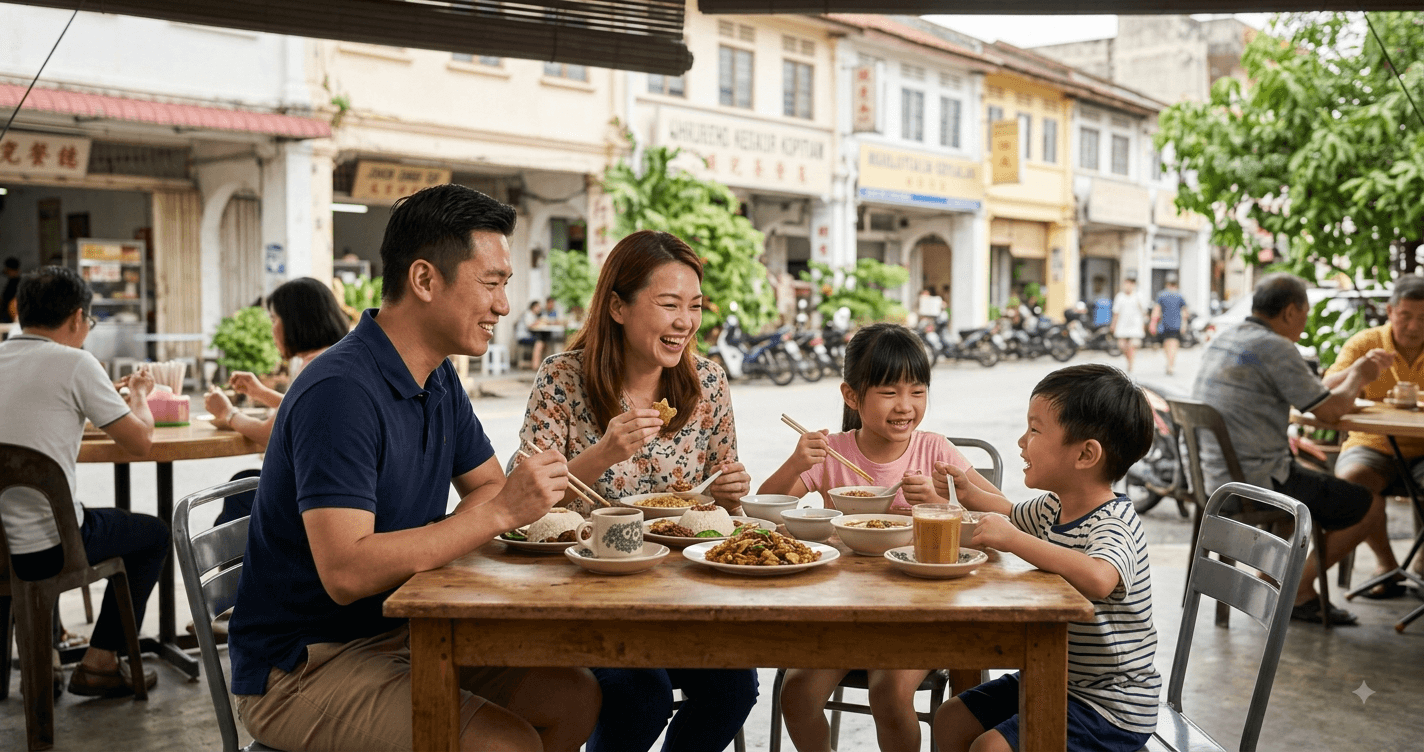
- Hawker and kopitiam: a plate of char kuey teow or chicken rice runs RM4–8; a full kopitiam breakfast with kopi is RM5–12.
- Casual restaurant: a standard local meal — laksa, a rice set — is about RM15 a head.
- Mall dining: a sit-down meal at SKS City Mall or City Square runs RM25–45 a head, closer to café pricing.
- Home cooking: groceries for one run a few hundred ringgit a month; wet markets beat the supermarket on fresh produce.
A single person who mixes hawker meals with some home cooking spends roughly RM600–1,000 a month on food. A family of four, eating mostly in, lands around RM1,500–2,500.
Getting around: car, or no car from 2027
Most JB households still run a car, and here Malaysians get a real edge: citizens buy RON95 petrol at a subsidised RM1.99 a litre under the BUDI95 scheme in August 2026, against an unsubsidised rate of about RM3.62 (paultan.org fuel price tracker, accessed 17 August 2026). Budget roughly:
- Fuel: RM150–300 a month for a daily-driven car, at the subsidised price.
- Parking and tolls: RM50–150 a month, more if you cross the Causeway by car.
- Insurance, road tax and servicing: a few hundred ringgit a month, averaged out.
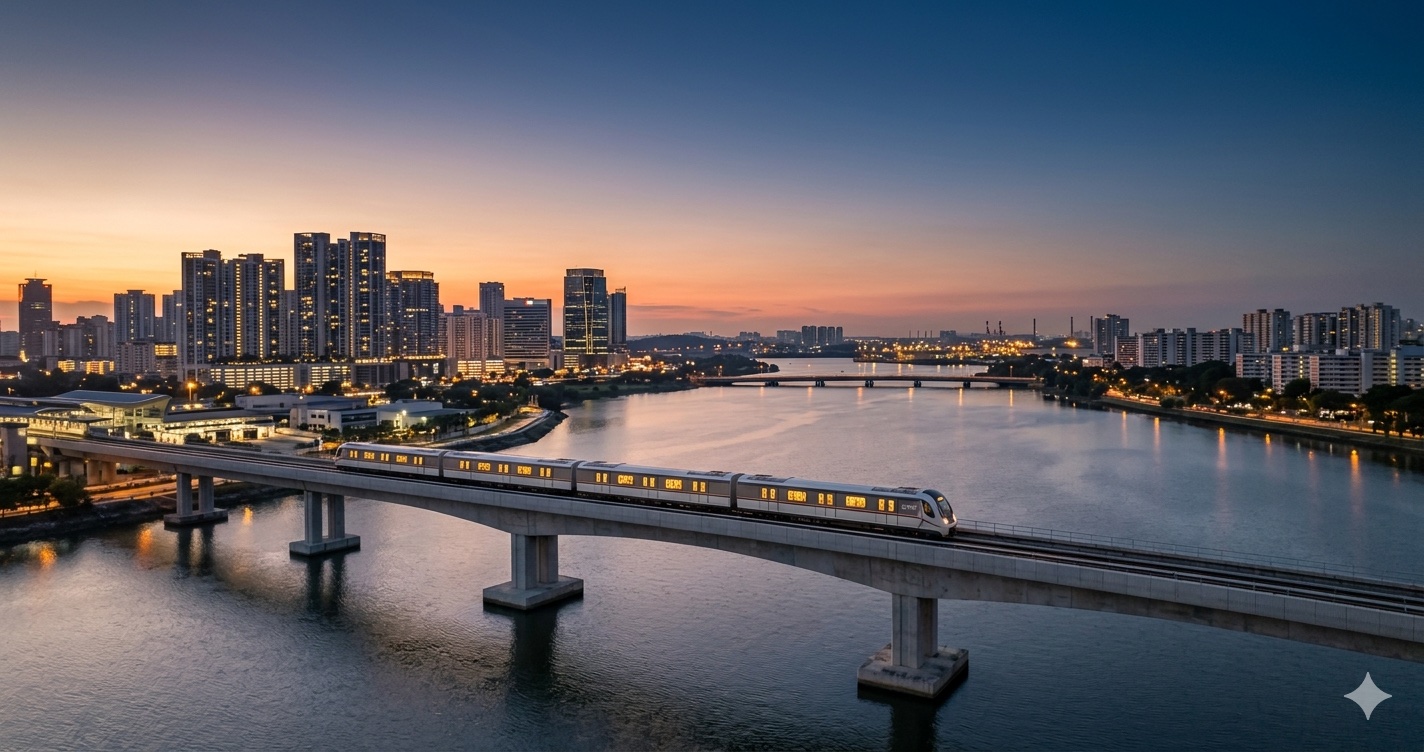
The car math changes in early 2027, when the RTS Link opens between Bukit Chagar and Woodlands North — about a five-minute ride across the Strait, with immigration cleared once at the station (Bukit Chagar RTS station, accessed 17 August 2026). A household 300 m from that platform can drop a second car, or skip the car entirely for the Singapore commute — a saving no monthly budget line captures until you live it.
Utilities, internet and mobile
These are small and predictable:
- Electricity and water: around RM100–150 a month for a single person running air-conditioning; RM250–400 for a family flat.
- Home fibre internet: about RM100–170 a month for a 100–300 Mbps plan.
- Mobile: RM30–100 a month, depending on your data.
Call the whole utilities-and-connectivity bucket RM250–350 for one person and RM400–600 for a family.
Families: schooling, childcare and healthcare
This is where a Malaysian passport does quiet, heavy lifting. Citizen children attend government schools for little more than nominal fees, and public healthcare charges citizens a token registration fee rather than the private rate — advantages that never show up in a foreigner's budget. The paid alternatives are there if you want them: private and international schools in JB span a wide fee range, and private hospitals sit well below Singapore's prices for the same procedure. Childcare and kindergarten for younger children typically run a few hundred to just over a thousand ringgit a month, depending on hours and whether it's a home-based or a branded centre. Because the specific figure swings so much by school and clinic, price the exact ones you'd use before you commit — but the citizen's baseline cost for schooling and healthcare is low.
What a JB income — or an SGD salary spent in JB — covers
Put the lines together and a comfortable single-person month lands around RM3,500–5,000 including rent, and a family of four around RM8,000–12,000. A local professional salary carries that. And for the many Malaysians who earn in Singapore and spend in JB, the exchange rate stretches every ringgit: one Singapore dollar bought about RM3.19 in mid-August 2026 (confirm the live rate with Bank Negara Malaysia, accessed 17 August 2026), so an SGD income spent on MYR costs is the arbitrage behind the whole JB move. Crucially, a Malaysian working in Singapore still buys property as a local — no RM1 million foreign-buyer floor, no state consent, no foreigner stamp-duty surcharge.
Rent or buy? Why buying at a local's price can win
Rent is money spent; a mortgage on freehold land is money moved into an asset. Three things tilt the sums toward buying for a Malaysian planning a long stay:
- You buy as a local. No RM1 million minimum, no State Authority consent, no 8% foreigner stamp-duty surcharge — the barriers that keep foreigners in the pricier tier simply don't apply.
- You can tap EPF and first-home relief. Citizens can withdraw from EPF Account 2 toward a home, and first-time buyers get a 100% stamp-duty exemption on homes up to RM500,000 (extended under Budget 2026 to 31 December 2027) — see how Malaysians finance a JB property.
- You exit tax-clean on a long hold. Real Property Gains Tax for citizens falls to 0% from the sixth year (LHDN RPGT rates, accessed 17 August 2026), so appreciation over a decade-plus hold is yours to keep.
Set a real mortgage figure beside the rents on this page: run a SkyOne unit through the installment calculator and see what owning a freehold home 300 m from the RTS costs you each month.